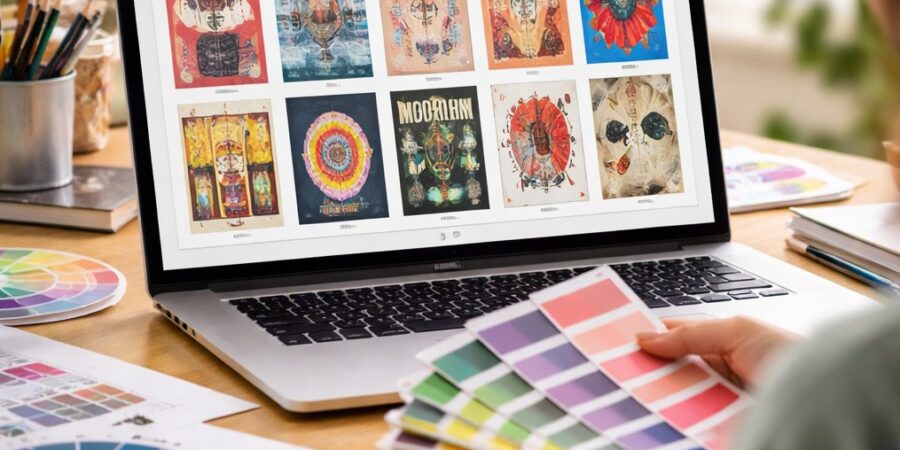
Identifying what makes a graphic design style unique can be a complex task, given the vast diversity and subtle nuances involved. However, focusing on a few core elements can help designers better understand the distinctiveness of a style and how to effectively employ it in their work.
Importance of historical context
Understanding the historical origins of a graphic design style can provide valuable insights into its unique attributes. The era and geographical location in which a style emerged often influence its characteristics. For instance, Bauhaus, emerging from early 20th-century Germany, emphasized minimalism and functionality. In contrast, Art Deco, with its roots in the 1920s and 1930s, is known for its lavish ornamentation and geometric forms.
Elements and principles of design
The foundational elements such as line, shape, color, and texture, along with principles like balance, contrast, and proportion, play a crucial role in defining a style. For example, Swiss design, renowned for its clean, grid-based structure, relies heavily on alignment and whitespace. In contrast, Grunge design often features distressed textures and chaotic layouts, creating a sense of rawness and rebellion.

Color palette and typography
Color schemes and typography are pivotal in shaping the visual identity of a design style. A style may utilize specific color palettes that evoke particular emotions or cultural references. For example, the use of pastel colors is a hallmark of the Retro style, evoking nostalgia and warmth. Meanwhile, Gothic design is characterized by dark, moody hues and intricate typefaces that emphasize drama and mystique.
Cultural influence and symbolism
Many graphic design styles are deeply intertwined with cultural elements and symbols. These can include anything from traditional motifs to modern iconography, each telling a story or conveying a message inherent to the style. For instance, Japanese design often incorporates delicate patterns and motifs from nature, reflecting a harmonious connection with the environment. In contrast, Pop Art uses vibrant colors and commercial imagery to challenge traditional norms.
Technology and innovation
Advancements in technology continually influence how graphic design styles evolve. Digital tools have expanded the possibilities for designers, allowing for greater experimentation and innovation. For instance, the development of digital design software has birthed styles like 3D design, characterized by its life-like textures and dynamic compositions. Similarly, the advent of AI-driven tools has opened new avenues in generative design, enabling unique forms and patterns that were once unimaginable.
Adaptability in diverse media
A graphic design style’s versatility across different media can also define its uniqueness. How a style translates from print to digital platforms, or from large formats to mobile screens, can greatly influence its application. A style that effectively maintains its core characteristics while adapting to these varied contexts shows a degree of flexibility and resilience that sets it apart.
By considering these aspects—historical context, design elements, color and typography, cultural symbolism, technological influences, and media adaptability—designers can better grasp and leverage the unique aspects of any graphic design style. These insights not only enhance creative projects but also enrich the designer’s toolkit, offering a broader palette of possibilities.